
Gentle osteopathic care for your baby and child
Osteopathy for Babies and Children in Barcelona & Sant Cugat
Perhaps you’re here because something doesn’t quite feel right: your baby always turns their head to one side, will only fall asleep in your arms, or cries after feeds and you don’t know why.
Maybe you’ve been told to wait and see, yet your instincts tell you that something deserves a closer look. You don’t need to justify seeking help. If something is worrying you, that’s reason enough to talk it through.
What brings families to see me?
If your concern isn’t on this list, please feel free to get in touch. Every baby is different, and I can help you work out whether an appointment might be appropriate.
What about older children?
Osteopathy may also be considered for children experiencing:
Difficulty concentrating at school
Back pain or postural discomfort
Ongoing discomfort after a fall or intensive sports activity
Tension or discomfort during orthodontic treatment
Persistent constipation or digestive discomfort
Osteopathic care can also support children as they grow, right through to adolescence. After a fall, a sprain or intensive sports activity, the body may retain areas of tension that deserve attention. I also understand the physical demands of dance, having practised it for more than ten years.
During orthodontic treatment, I recommend considering an appointment when braces are first fitted and after subsequent adjustment appointments, if needed, to assess any associated tension around the jaw, neck or back.
For children with scoliosis or postural problems, I work alongside their physiotherapist, never in place of physiotherapy or medical care.
Difficulty concentrating in class or persistent constipation can also be reasons to seek an assessment. There is no need to feel guilty or to blame yourself or your child.
Consultation fees: 45 minutes — €60 in Sant Cugat and €70 in Barcelona.
Osteopathy for babies: what happens during a session? »
This is often the first question parents have, even when they feel hesitant to ask.
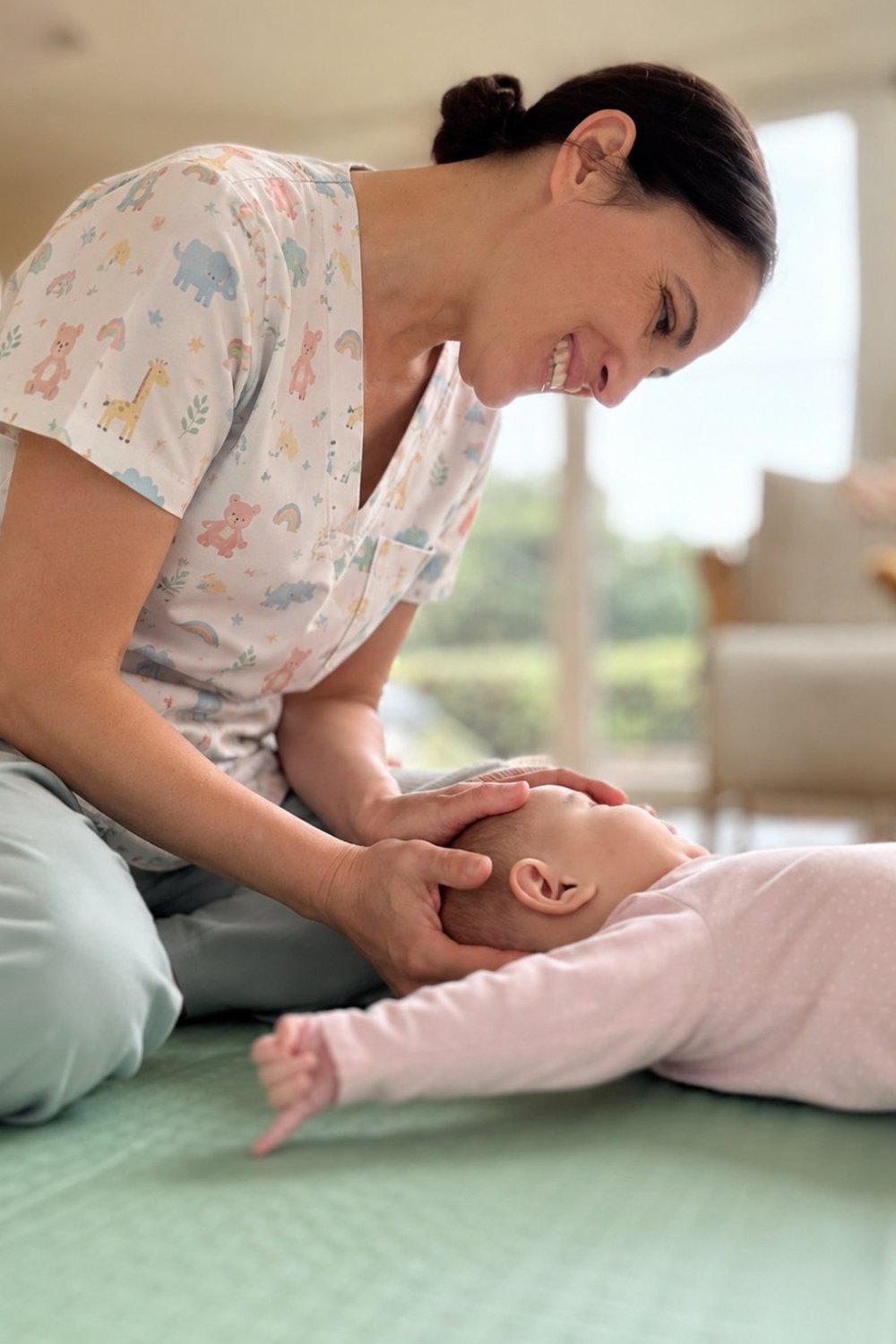
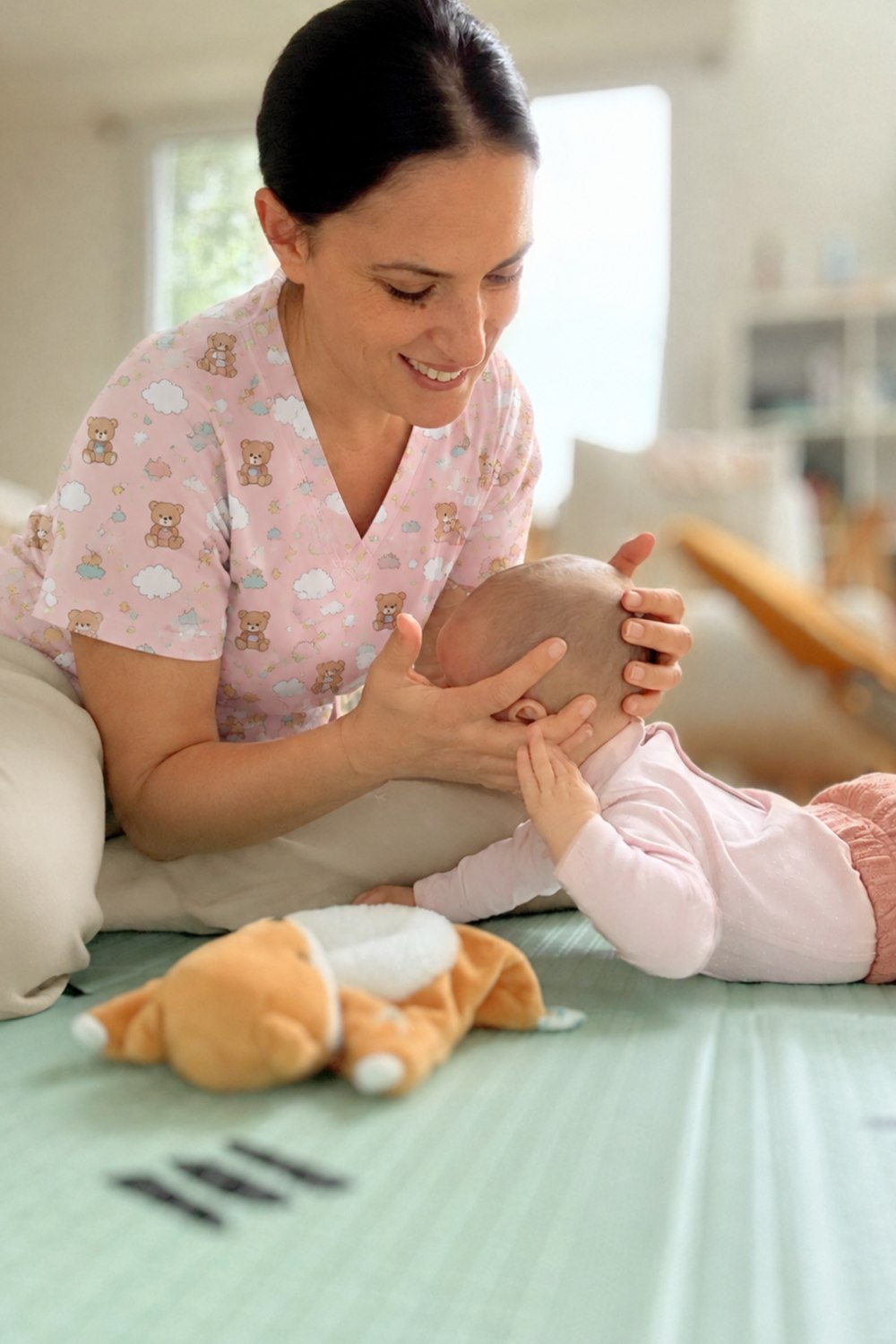
An appointment lasts approximately 45 minutes. I use very gentle, age-appropriate hands-on techniques, and you stay with your baby throughout the session. There are no forceful manipulations or sudden movements.
If your baby cries a little during the appointment, it is often because they are hungry, tired or getting used to a new environment — not necessarily because they are in pain. I always adapt the pace of the session to your baby’s needs and comfort on that particular day.
The treatment is gentle and guided by your baby’s comfort and the response of their tissues.
I do not manipulate the fontanelle (the soft spot on your baby’s head). I take particular care to respect this area throughout the session.
And what about you?
You may be coming in for your baby, but you don’t have to leave your own discomfort at the door.
Your back pain, pelvic discomfort and fatigue matter too. If you’d like to talk about how you’re feeling, there is room for that in our appointment as well.
Frequently asked questions
Can the session hurt my baby?
The techniques I use are very gentle, and you remain with your baby throughout the appointment.
Some babies cry a little, most often because they are hungry, tired or simply adjusting to an unfamiliar environment. Crying does not necessarily mean that they are in pain.
What exactly do you do during a session?
I assess your baby’s mobility and use very gentle hands-on techniques to address areas of tension I identify, which may involve the head, neck or pelvis. There are no cracking sounds or forceful manipulations.
Is it dangerous to touch such a young baby’s head?
The techniques I use in paediatric osteopathy are very gentle. I never manipulate the fontanelle and take particular care when working around your baby’s head.
My paediatrician hasn’t mentioned osteopathy. Is it really necessary?
Your paediatrician is responsible for your baby’s medical care and developmental monitoring. Depending on the reason for your appointment, there may be other observations you would like to discuss, such as a preference for turning the head to one side or concerns about movement.
Osteopathy is complementary to medical care, not a replacement for it. If something is worrying you, you can discuss your concerns with me even if your paediatrician hasn’t specifically recommended an osteopathic appointment.
Might my baby react after the session?
Some babies may seem a little more tired or unsettled in the hours following an appointment, while others show no noticeable change. I will explain what you might observe based on your baby’s individual circumstances and advise you on when to seek medical advice if you have any concerns.
How many sessions will my baby need?
This depends on your baby’s needs and what we find during the assessment. Some families may benefit from more than one appointment. I will explain my recommendations clearly as we go along, without suggesting unnecessary follow-up visits.
Can I claim the cost back through my health insurance?
I will provide an invoice that you can submit to your insurer. Please check your policy in advance to see whether osteopathy is covered.
Do I need a medical referral to book an appointment?
No. You can book directly without a medical referral.
My child has just had braces fitted. Should we book an appointment?
It can be a useful time to assess whether there is any associated tension. An appointment can be considered when the braces are fitted and after subsequent orthodontic adjustments, depending on your child’s needs.
My child has had a fall or takes part in intensive sports. Should I be concerned?
Not necessarily. However, if your child has ongoing discomfort or restricted movement after a fall or sports activity, it is important to seek appropriate medical advice. An osteopathic assessment may be considered as complementary care when appropriate.
My child has been diagnosed with scoliosis. How can you help?
I work alongside physiotherapy and medical follow-up, never in place of them. My role is to assess mobility and associated muscular or postural tension as part of a complementary approach.
My child struggles to concentrate in class. Can osteopathy help?
Difficulty concentrating can have many causes. Osteopathy cannot replace an appropriate medical or developmental assessment. If your child has associated physical discomfort or tension, an osteopathic assessment may be considered as part of their overall care.
My child is often constipated. Is it worth making an appointment?
Persistent constipation deserves appropriate medical assessment, particularly in children. Osteopathy may be considered as complementary care in some situations, but it does not replace advice or treatment from your child’s healthcare professional. There is no need to blame yourself or your child.
Practical information
Sant Cugat del Vallès
Origen Salut
Plaça Pep Ventura, Sant Cugat del Vallès
Tuesdays and Thursdays, 9:30 am–12:30 pm
Appointment: €60
Duration: 45 minutes
Barcelona
Barcelona Terapia
Travessera de Gràcia, 12, Barcelona
Wednesdays, from 10 am
Appointment: €70
Duration: 45 minutes
Consultations are available in French, English and Spanish.